From a sermon by Saint Bernard, abbot
Let us make haste to our brethren who are awaiting us.
Why should our praise and glorification, or even the celebration of this feast day mean anything to the saints? What do they care about earthly honors when their heavenly Father honors them by fulfilling the faithful promise of the Son? What does our commendation mean to them? The saints have no need of honor from us; neither does our devotion add the slightest thing to what is theirs. Clearly, if we venerate their memory, it serves us, not them. But I tell you, when I think of them, I feel myself inflamed by a tremendous yearning.
Calling the saints to mind inspires, or rather arouses in us, above all else, a longing to enjoy their company, so desirable in itself. We long to share in the citizenship of heaven, to dwell with the spirits of the blessed, to join the assembly of patriarchs, the ranks of the prophets, the council of apostles, the great host of martyrs, the noble company of confessors and the choir of virgins. In short, we long to be united in happiness with all the saints. But our dispositions change. The Church of all the first followers of Christ awaits us, but we do nothing about it. The saints want us to be with them, and we are indifferent. The souls of the just await us, and we ignore them.
Come, brothers, let us at length spur ourselves on. We must rise again with Christ, we must seek the world which is above and set our mind on the things of heaven. Let us long for those who are longing for us, hasten to those who are waiting for us, and ask those who look for our coming to intercede for us. We should not only want to be with the saints, we should also hope to possess their happiness. While we desire to be in their company, we must also earnestly seek to share in their glory. Do not imagine that there is anything harmful in such an ambition as this; there is no danger in setting our hearts on such glory.
When we commemorate the saints we are inflamed with another yearning: that Christ our life may also appear to us as he appeared to them and that we may one day share in his glory. Until then we see him, not as he is, but as he became for our sake. He is our head, crowned, not with glory, but with the thorns of our sins. As members of that head, crowned with thorns, we should be ashamed to live in luxury; his purple robes are a mockery rather than an honor. When Christ comes again, his death shall no longer be proclaimed, and we shall know that we also have died, and that our life is hidden with him. The glorious head of the Church will appear and his glorified members will shine in splendor with him, when he forms this lowly body anew into such glory as belongs to himself, its head.
Therefore, we should aim at attaining this glory with a wholehearted and prudent desire. That we may rightly hope and strive for such blessedness, we must above all seek the prayers of the saints. Thus, what is beyond our own powers to obtain will be granted through their intercession.
Saturday, November 1, 2014


Let us die with Christ, to live with Christ
From a book on the death of his brother Satyrus by Saint Ambrose, bishop
Let us die with Christ, to live with Christ
We see that death is gain, life is loss. Paul says: For me life is Christ, and death a gain. What does “Christ” mean but to die in the body, and receive the breath of life? Let us then die with Christ, to live with Christ. We should have a daily familiarity with death, a daily desire for death. By this kind of detachment our soul must learn to free itself from the desires of the body. It must soar above earthly lusts to a place where they cannot come near, to hold it fast. It must take on the likeness of death, to avoid the punishment of death. The law of our fallen nature is at war with the law of our reason and subjects the law of reason to the law of error. What is the remedy? Who will set me free from this body of death? The grace of God, through Jesus Christ, our Lord.
We have a doctor to heal us; let us use the remedy he prescribes. The remedy is the grace of Christ, the dead body our own. Let us then be exiles from our body, so as not to be exiles from Christ. Though we are still in the body, let us not give ourselves to the things of the body. We must not reject the natural rights of the body, but we must desire before all else the gifts of grace.
What more need be said? It was by the death of one man that the world was redeemed. Christ did not need to die if he did not want to, but he did not look on death as something to be despised, something to be avoided, and he could have found no better means to save us than by dying. Thus his death is life for all. We are sealed with the sign of his death; when we pray we preach his death; when we offer sacrifice we proclaim his death. His death is victory; his death is a sacred sign; each year his death is celebrated with solemnity by the whole world.
What more should we say about his death since we use this divine example to prove that it was death alone that won freedom from death, and death itself was its own redeemer? Death is then no cause for mourning, for it is the cause of mankind’s salvation. Death is not something to be avoided, for the Son of God did not think it beneath his dignity, nor did he seek to escape it.
Death was not part of nature; it became part of nature. God did not decree death from the beginning; he prescribed it as a remedy. Human life was condemned because of sin to unremitting labor and unbearable sorrow and so began to experience the burden of wretchedness. There had to be a limit to its evils; death had to restore what life had forfeited. Without the assistance of grace, immortality is more of a burden than a blessing.
The soul has to turn away from the aimless paths of this life, from the defilement of an earthly body; it must reach out to those assemblies in heaven (though it is given only to the saints to be admitted to them) to sing the praises of God. We learn from Scripture how God’s praise is sung to the music of the harp: Great and wonderful are your deeds, Lord God Almighty; just and true are your ways, King of the nations. Who will not revere and glorify your nature? You alone are holy; all nations will come and worship before you. The soul must also desire to witness your nuptials, Jesus, and to see your bride escorted from earthly to heavenly realities, as all rejoice and sing: All flesh will come before you. No longer will the bride be held in subjection to this passing world but will be made one with the spirit.
Above all else, holy David prayed that he might see and gaze on this: One thing I have asked of the Lord, this I shall pray for: to dwell in the house of the Lord all the days of my life, and to see how gracious is the Lord.
Let us die with Christ, to live with Christ
We see that death is gain, life is loss. Paul says: For me life is Christ, and death a gain. What does “Christ” mean but to die in the body, and receive the breath of life? Let us then die with Christ, to live with Christ. We should have a daily familiarity with death, a daily desire for death. By this kind of detachment our soul must learn to free itself from the desires of the body. It must soar above earthly lusts to a place where they cannot come near, to hold it fast. It must take on the likeness of death, to avoid the punishment of death. The law of our fallen nature is at war with the law of our reason and subjects the law of reason to the law of error. What is the remedy? Who will set me free from this body of death? The grace of God, through Jesus Christ, our Lord.
We have a doctor to heal us; let us use the remedy he prescribes. The remedy is the grace of Christ, the dead body our own. Let us then be exiles from our body, so as not to be exiles from Christ. Though we are still in the body, let us not give ourselves to the things of the body. We must not reject the natural rights of the body, but we must desire before all else the gifts of grace.
What more need be said? It was by the death of one man that the world was redeemed. Christ did not need to die if he did not want to, but he did not look on death as something to be despised, something to be avoided, and he could have found no better means to save us than by dying. Thus his death is life for all. We are sealed with the sign of his death; when we pray we preach his death; when we offer sacrifice we proclaim his death. His death is victory; his death is a sacred sign; each year his death is celebrated with solemnity by the whole world.
What more should we say about his death since we use this divine example to prove that it was death alone that won freedom from death, and death itself was its own redeemer? Death is then no cause for mourning, for it is the cause of mankind’s salvation. Death is not something to be avoided, for the Son of God did not think it beneath his dignity, nor did he seek to escape it.
Death was not part of nature; it became part of nature. God did not decree death from the beginning; he prescribed it as a remedy. Human life was condemned because of sin to unremitting labor and unbearable sorrow and so began to experience the burden of wretchedness. There had to be a limit to its evils; death had to restore what life had forfeited. Without the assistance of grace, immortality is more of a burden than a blessing.
The soul has to turn away from the aimless paths of this life, from the defilement of an earthly body; it must reach out to those assemblies in heaven (though it is given only to the saints to be admitted to them) to sing the praises of God. We learn from Scripture how God’s praise is sung to the music of the harp: Great and wonderful are your deeds, Lord God Almighty; just and true are your ways, King of the nations. Who will not revere and glorify your nature? You alone are holy; all nations will come and worship before you. The soul must also desire to witness your nuptials, Jesus, and to see your bride escorted from earthly to heavenly realities, as all rejoice and sing: All flesh will come before you. No longer will the bride be held in subjection to this passing world but will be made one with the spirit.
Above all else, holy David prayed that he might see and gaze on this: One thing I have asked of the Lord, this I shall pray for: to dwell in the house of the Lord all the days of my life, and to see how gracious is the Lord.
Friday, October 24, 2014
Culion Island - Palawan

What comes to your mind when you hear the place
called Culion? When you search the Google Earth you have to mention the Island.
Many specially the older one will recall the stigma of the place Culion
Island.. But of course we cannot deny it, yet culion is already rising beyond
that kind of discriminations mostly the cure of the dreaded disease. And as the
latest announcement in the world of tourism this place is also one of the
great islands of Palawan so it could be the undiscovered paradise too. The Island
tours have the exact spots of Coron and even the Busuanga since they are parts
of the Calamianes groups of island but each has its own unique identity and
paradoxically the uniqueness of Culion lies on its very own historical
identity, ironically its own stigma, that is being cured by its Museum and
great landmarks and symbols of love and care of all its patience before and from
our forefathers to all the doctors and nurses and scientists who lived and died
here, then the Religious priests and nuns of St. Paul's and the Jesuits. Through them all, gained its own beauty. The goodness of its past and
the truth of its future as it is happening now in the present. And this is the
very reason why Culion is one of the prides of medical mission. That's why when
it comes to medical treatments of the Culion Sanitarium General Hospital the
place is one of the best not only in Calamian areas but even the whole of
Palawan.


agila

panoramic views

the Marker

lighthouse


museum
As you entered the island you will always
noticed and see its great landmark called "Aguila" the symbol of
Philippine Health Service. When you reached the town you will be greeted by
the fisher folks along the port itself as fishing at pantalan is one of the
traditions of the people of Culion. Then most of the time there is one tall guy
who will greet you for a tour guide to see the great memories of the past and
the history of the town with some other landmarks around. Like the latest
unveiling of the Historical Marker where the first landing of leper patients
who were isolated and being cured here. This Landmark is already being
recognized by our very own Philippine historical agency. You will also see some
of the oldest structures during that time most specially the oldest port and
lighthouse along with the baroque church built to strengthen the faith of all
the people inside during the past and even now. You can also glimpse some of
the old houses and statues around. And of course the first landmark that you
saw when you entered the place by boat the "Eagle" that you can also
climb as part of the attraction where you can see the breathtaking view of the
surrounding islands by the deep blue sea including the majestic Kalis mountain as
the Google earth call it now Coron Island. Climbing the "Aguila" is
like mountain trekking and that is one unique challenge specially when you
climb at dawn or dusk, it will be some kind of spiritual experience, an escape
to all the noises within and without. Including the place we now called little
Tagaytay on top of the mountains the Pulang Lupa.


There are other main attractions of Culion and
these are the islands around near and far, we called the island hopping. Here
includes the view of the magnificent limestone mountains like Sangat island and
the Kalis mountain as mentioned earlier. Then the white sand beaches and the
famous resorts around. Another attraction of the place includes the animal
sanctuary called Calauit. But a little far that could also be one of the main attractions
here in Calamianes. Culion also have small waterfalls but a little bit remote
in one of its barangays, if you have more time you can also have this
adventure.


kalis
sangat
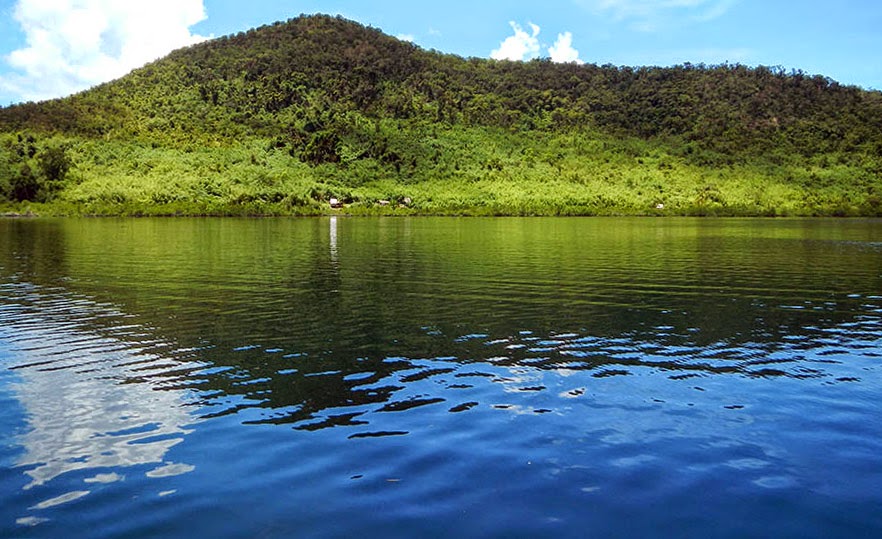
At the back of the island facing the so called
West Philippine Sea formerly known as China sea you will experience some of the
beautiful and even strange islands around; like small caves, the mangrove
swamps with the fireflies on it during the night plus the bay within the bay
not to mention what many called treasure island or we call now
"secret" island. There are many other meaningful adventures and
surprises when you roam around this unique place...

cabulihan
The island is also surrounded by many
shipwrecks. Most of them were the wreckage of World War 2 almost all of them
were Japanese war ships as they were hiding the place before the war ends. You
can even dive them without using scuba diving equipment just snorkel is good
enough to see the shipwreck while floating on top of it. This is also one
of the historical wonders of the place. But of course if you love deep diving,
shipwreck is one of the best experiences here.

So now every time you hear the place Culion
hopefully you'll not only see the stigma but the paradoxical beauty of the
island as the world recognizes now the place called Palawan. Yet Palawan is not
only Underground river of Puerto Princesa or the El Nido or Amanpulo or even
Coron or Busuanga it could also be called now Coolyun ;)




CONTACT US
jhohng@gmail.com


Subscribe to:
Posts (Atom)